You check your phone at the end of the, and data is gone. You barely streamed any videos, you didn't download any large files, yet your mobile data allowance has vanished into thin air. frustrating experience is common than in 2026, as our smartphones become more powerful and connected, they also hungrier data in ways you might not expect. Understanding exactly what eats data on your cell phone is the first step to taking back control of your monthly bill.
This article will serve as your comprehensive guide to identifying and managing every data-consuming activity on your smartphone. We will explore the hidden culprits, from background app refreshes to system-level services, and provide you with actionable strategies to reduce your data usage without sacrificing the functionality you rely on. By the end, you will have a clear roadmap to diagnose your data drain and implement effective solutions
The Hidden Appetite: Background App Refresh and Syncing
The single biggest culprit of unexplained data loss is background app refresh. This feature, enabled by default on both iOS and Android, allows to check for updates, download new content, and sync data even when you are not using them. In 2026, with becoming increasingly complex, this background activity can consume gigabytes of data per month. example, social media app might refresh your feed every 15 minutes, downloading new images, videos, and ads each time, even if you only open the app once a day.
Beyond social media, cloud syncing services like Google Photos, iCloud, and Dropbox are major data consumers. When you take a photo or video, these services often begin uploading it to the cloud in the background. In 2026, high-resolution photos can be 1020 MB each, and a single 4 can be over 500 MB. If you a dozen photos and a short video while out for the day, your phone quietly upload over a gigabyte of data without you ever opening the syncing app. This is problematic if you have automatic backup enabled for your entire camera roll.
To combat this, you should review your app refresh settings. On iPhone, go to Settings > General > Background App Refresh and disable it for apps do not need constant updates, like shopping apps or games. On Android, go to Settings > Apps > [App Name] > Data usage and restrict background data. For cloud syncing, set these apps to upload only when connected to Wi. This single change can often reduce your monthly data usage by 30-50%, making it the most impactful adjustment you can make.
Key Takeaways
- ✓ Background app refresh and cloud syn are the top hidden data consumers; disable them for non-essential apps and set syncing to Wi only.
- ✓ Streaming video at 4K or 1080p can 3-7 GB per hour always lower the resolution to 480p or 720 when on cellular data.
- ✓ System services like Wi-Fi Assist and automatic app can silently drain gigabytes; disable Wi-Fi Assist and set updates to Wi-Fi only.
- ✓ Live widgets, AI features, and rich notifications are modern data eaters; audit your widgets and disable cloud processing for AI tools.
- ✓ Use your phone's built-in data tracking tools to identify the top 5 data-consuming apps each month and adjust their settings accordingly.
Frequently Asked Questions
How can I see exactly which apps are using my data?
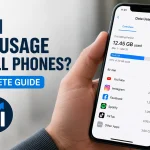
A On iPhone, go to Settings > Cellular and scroll down to see a list of apps with data usage. On Android, go to Settings > Network & internet > Data usage > App data You can also reset these statistics at the start of each billing cycle for accurate tracking. Many carrier apps also provide detailed breakdowns of your data usage by app.
Does using a VPN increase my data usage significantly?
Yes, a VPN typically increases data usage by 5-15% due to the encryption overhead and routing protocols. For example, if you normally use 10 GB per month, could add an extra 0.5 to 1 GB. However, the privacy benefits often outweigh the cost for many users. To minimize the impact, use a VPN only for sensitive activities like banking or public Wi-Fi, and disable it for general browsing.
What is the best way to reduce data usage from social media apps?
The most effective method is to disable auto-play for videos in the app's settings. On Instagram, go to Settings > Account > Cellular Data Use and select "Use Less Data." On TikTok go to Settings > Dataver and enable it. Additionally,-load content when on Wi-Fi by using theSave Data" or "Offline" features available in apps. Finally, restrict background data for these apps entirely.
Can I use my phone's built-in data saver mode fix the problem?
Absolutely. Both iOS and Android have built-in "Low Data Mode" or "Data Saver" features. On iPhone, go to Settings > Cellular > Cellular Data Options "Low Data Mode." On Android, to Settings > Network & internet > Data Saver and turn it on. These modes restrict background activity, lower video quality, and disable automatic updates, providing a comprehensive, one-tap solution to reduce data usage.
How much data do video calls like FaceTime and Zoom use?
Video calls are significant data consumers. A standard one-on-oneTime or Zoom call uses approximately 1.5 to 2.5 GB per hour quality. Group with multiple participants can use 3-5 GB per hour. To reduce usage, always switch to audio-only mode when video is not necessary, or lower the video quality to standard definition in the's settings This can cut data usage by 80%.
Conclusion
In 2026, understanding what eats data on your cell phone is more important than ever. From the silent background activities of app refresh and cloud syncing to the obvious consumption of streaming and video calls, the culprits are numerous but manageable. By taking control of your settings, disabling unnecessary features, and being mindful of your streaming habits, you can significantly reduce your data usage without sacrificing the core functionality of your smartphone.
We encourage you to start with the most impactful changes: disable background app refresh for non-essential apps, set all streaming services to lower quality on cellular, and off Wi-Fi Assist. Then, your phone's data tracking tools to monitor your progress over the next month. You will likely be at how much data you can save with just a few minutes of configuration. Take charge of your data today, and keep your monthly bill under control.

Daniel Mitchell is a home appliances specialist with over a decade of hands-on experience testing, reviewing, and comparing everyday household products. He focuses on helping homeowners make smarter buying decisions through practical insights, real-world testing, and easy-to-understand advice. Daniel covers everything from kitchen appliances to smart home solutions, with a strong emphasis on performance, energy efficiency, and long-term reliability.