Disclosure: As an Amazon Associate, we earn from qualifying purchases. This does not affect the price you pay.
Cell phones are part of everyday life, but some users prefer to create more distance between their phones and their bodies or completely disconnect their devices when they are not in use. That is where cell phone EMF pouches, shielding sleeves, and Faraday bags come in.
Finding the best cell phone EMF protection product can be confusing because not every accessory works in the same way. Some products provide directional shielding while allowing your phone to remain connected. Others are designed to block cellular, Wi-Fi, Bluetooth, GPS, and RFID signals completely when correctly sealed.
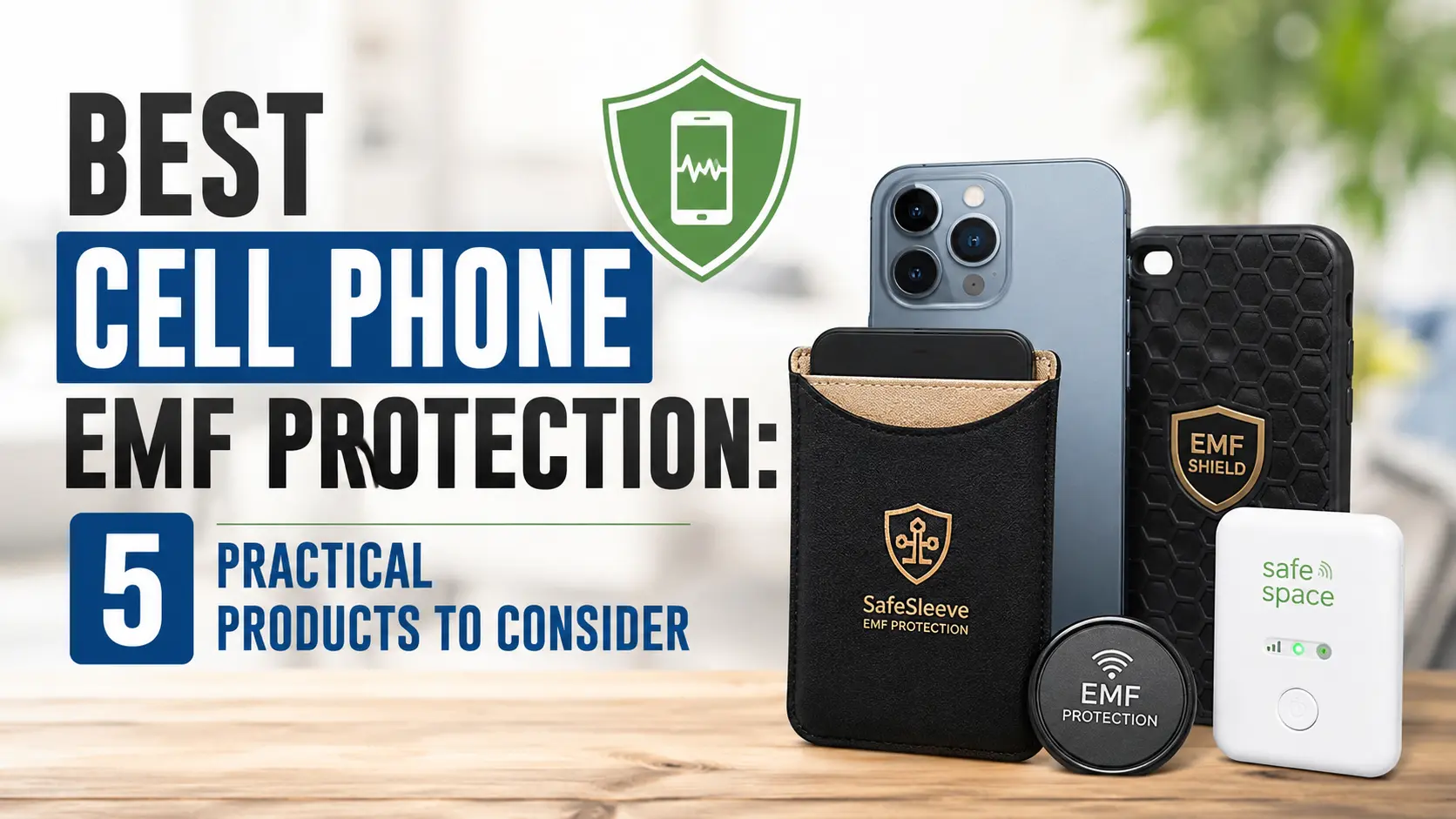
We reviewed five currently listed Amazon products based on their intended use, construction, compatibility, closure design, portability, and seller-provided specifications. The products below include practical options for everyday carrying, travel, digital privacy, signal isolation, and device storage.
Before choosing one, it is important to understand what these products can and cannot do. No phone pouch or case should be treated as a medical device, and no product can guarantee protection from health problems.
Important Information About Cell Phone EMF Products
Cell phones use radiofrequency energy to communicate with nearby towers and wireless networks. According to the U.S. Food and Drug Administration, the weight of current scientific evidence has not linked normal cell-phone radiofrequency exposure with health problems.
The Federal Trade Commission also warns consumers that products claiming to block only a small portion of a phone may not significantly reduce overall exposure. A poorly designed shield could interfere with reception, causing the phone to work harder to maintain a connection.
For that reason, this guide does not claim that any product prevents disease. Instead, it focuses on the products’ practical functions, such as directional shielding, increasing distance from the body, completely isolating a device from wireless networks, or protecting digital privacy.
Best Cell Phone EMF Protection Products Compared
| Product Name | Best For | Check Price |
|---|---|---|
| DefenderShield EMF Radiation Blocker Phone Pouch | Best overall directional phone pouch | View on Amazon |
| RadiArmor EMF Blocking Cell Phone Sleeve | Best slim everyday sleeve | View on Amazon |
| TOMUM EMF Shield Sleeve for Cell Phone | Best affordable directional sleeve | View on Amazon |
| Mission Darkness Dry Shield Faraday Phone Sleeve | Best waterproof signal-isolation pouch | View on Amazon |
| Mission Darkness Non-Window Faraday Bag for Phones | Best complete signal-blocking bag | View on Amazon |
Top 5 Cell Phone EMF Protection Products Reviewed
1. DefenderShield EMF Radiation Blocker Phone Pouch
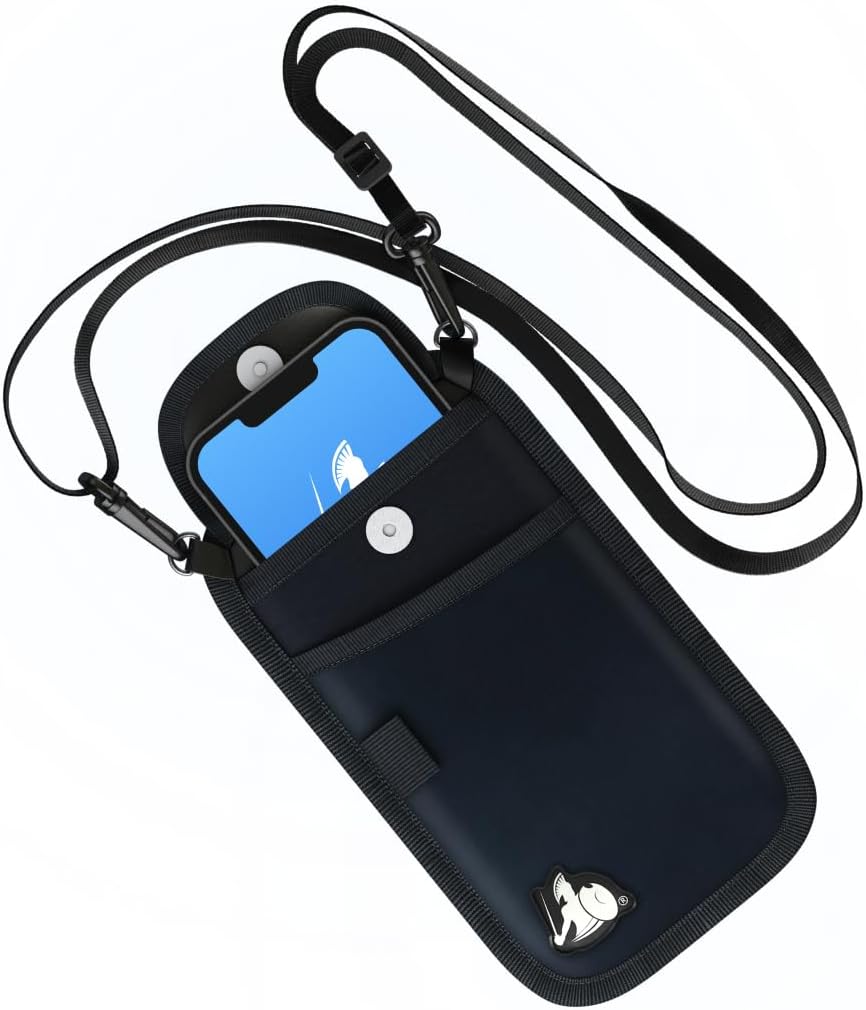
The DefenderShield phone pouch is one of the most practical options for people who want a directional shielding accessory without completely disconnecting their phones. According to the Amazon listing, it accommodates many smartphones measuring up to approximately 7.5 by 4 inches.
The pouch includes a magnetic flap, a front storage pocket, and an adjustable crossbody strap. These additions make it more versatile than a basic sleeve, especially for walking, commuting, travelling, or carrying a phone without placing it directly in a trouser pocket.
Its shielding is directional. This means the shielded side must be positioned between the phone and your body. The phone can generally remain connected to cellular and wireless networks because the pouch is not intended to operate like a completely sealed Faraday bag.
Pros
- Fits many large smartphones and protective cases.
- Includes a crossbody strap and additional storage pocket.
- Allows the phone to remain available for calls and notifications.
Cons
- Directional shielding requires correct positioning.
- Larger and less discreet than a simple phone sleeve.
My Honest Opinion
Based on its design and intended use, DefenderShield is the strongest all-round option in this guide. It is particularly suitable for users who want to carry their phones away from their bodies while remaining connected. However, it should not be confused with a full signal-blocking bag, and users must keep the shielded side facing their bodies.
2. RadiArmor EMF Blocking Cell Phone Sleeve
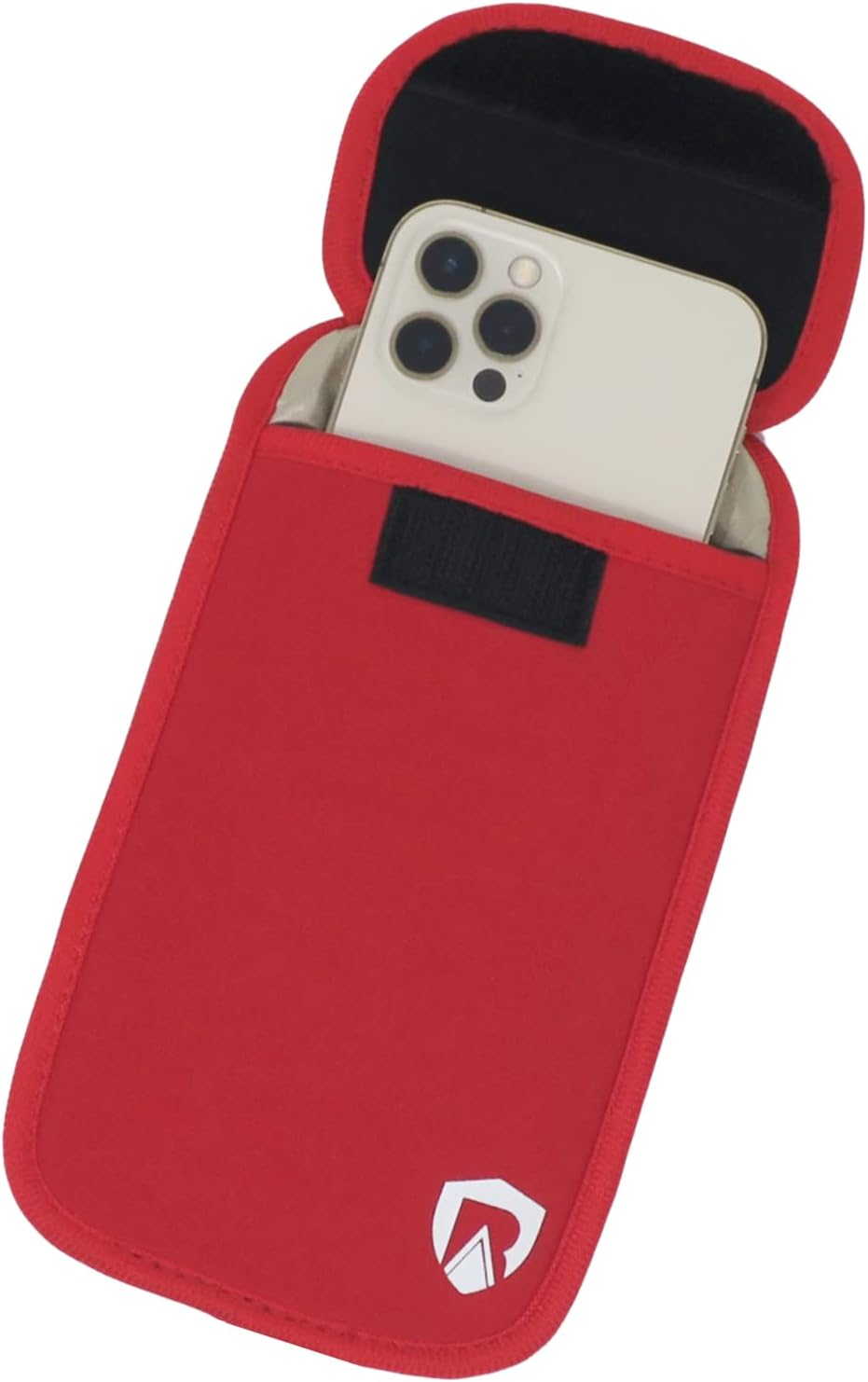
The RadiArmor EMF Blocking Cell Phone Sleeve is a slim alternative for users who do not need a strap, wallet pocket, or bulky closure system. It is designed to hold most common smartphones and can be placed inside a handbag, backpack, jacket, or larger carrying case.
RadiArmor describes the product as a one-sided shielding sleeve. Therefore, its orientation matters: the shielded panel should be kept between the phone and the body. The open or unshielded side allows the phone to continue communicating with wireless networks.
The simple sleeve design is its greatest advantage. There are fewer moving parts, and it takes up less room than a crossbody pouch. However, users should carefully check the listed internal measurements before ordering, particularly when using an oversized phone or a thick protective case.
Pros
- Slim, lightweight, and easy to carry.
- Designed to accommodate many popular smartphones.
- Keeps the phone accessible instead of completely blocking signals.
Cons
- Protection is limited to the shielded direction.
- Fit may be tight for large phones with rugged cases.
My Honest Opinion
RadiArmor is a practical choice for minimalists. It is easier to place in a bag or jacket than the larger DefenderShield pouch, but it offers fewer carrying features. It makes the most sense for users who understand directional shielding and want a straightforward sleeve rather than a complete wireless-disconnection solution.
3. TOMUM EMF Shield Sleeve for Cell Phone
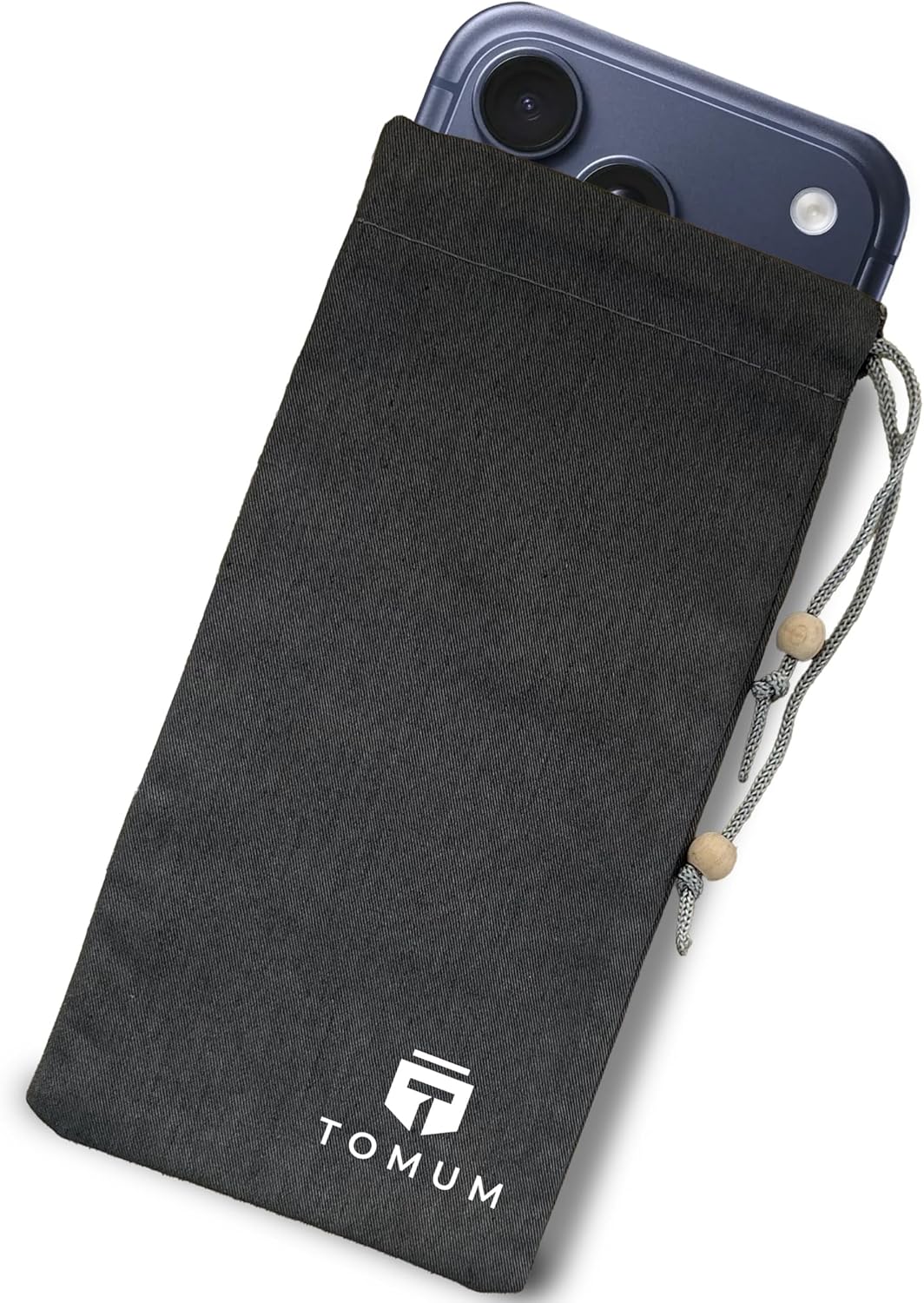
The TOMUM EMF Shield Sleeve is an affordable option for shoppers who want a simple directional pouch. Its Amazon listing describes an interior shielding layer made with high-purity silver material and states that the design allows the phone to retain a usable signal.
The seller claims that the sleeve can reduce radiofrequency energy in the shielded direction by up to 99%. This is a manufacturer or seller claim and has not been independently verified by this website. Actual results may depend on the phone, network conditions, frequency, pouch orientation, and how the product is used.
Like the RadiArmor sleeve, TOMUM is intended to be positioned with the shielding layer facing the user. It is not designed to completely prevent calls, messages, tracking, or wireless connections.
Pros
- Simple and portable sleeve design.
- More affordable than many premium shielding pouches.
- Designed to maintain phone connectivity during use.
Cons
- The seller’s percentage-reduction claim is not independently verified here.
- Correct orientation is necessary for directional shielding.
My Honest Opinion
TOMUM may appeal to budget-conscious buyers who want to try a basic directional sleeve. However, shoppers should view percentage-based performance claims cautiously unless they can review detailed laboratory reports showing the frequencies, test methods, distances, and product orientation used.
4. Mission Darkness Dry Shield Faraday Phone Sleeve
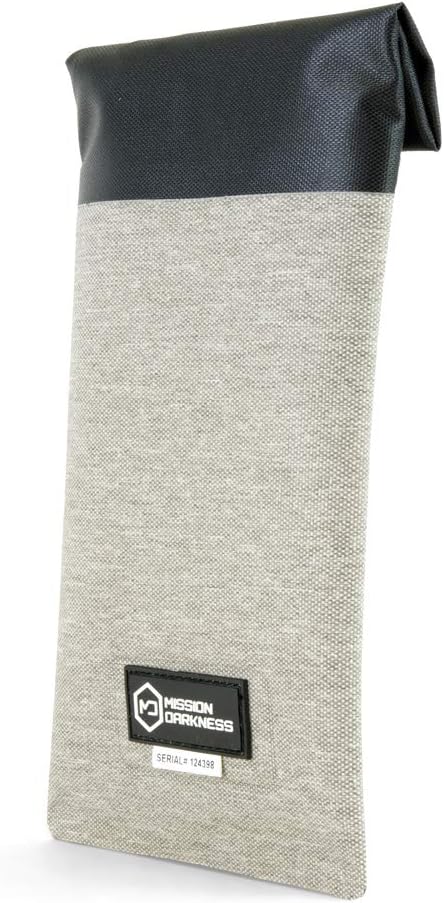
The Mission Darkness Dry Shield serves a different purpose from the first three products. It is a Faraday phone sleeve intended to completely isolate a properly sealed device from cellular service, Wi-Fi, Bluetooth, GPS, RFID, and other wireless communications.
Its dry-bag-style exterior is designed for users who also want protection from rain, splashes, dirt, sand, and outdoor conditions. This makes it potentially useful during travel, camping, boating, evidence handling, device storage, or situations where digital privacy is more important than remaining connected.
When the bag is correctly closed and working as intended, the phone should become unreachable. Calls, messages, app notifications, GPS updates, wireless accessories, and cloud synchronisation will not function until the device is removed.
Pros
- Designed to provide complete wireless signal isolation.
- Water-resistant dry-bag-style exterior for outdoor use.
- Useful for privacy, travel, storage, and digital-disconnection purposes.
Cons
- The phone cannot receive calls, messages, or notifications while sealed.
- The closure must be secured correctly for reliable isolation.
My Honest Opinion
This is the best option in the comparison for users who need both signal isolation and an outdoor-friendly enclosure. It is not the right product for anyone who needs to remain reachable. Think of it as a temporary wireless blackout pouch rather than an everyday connected phone case.
5. Mission Darkness Non-Window Faraday Bag for Phones
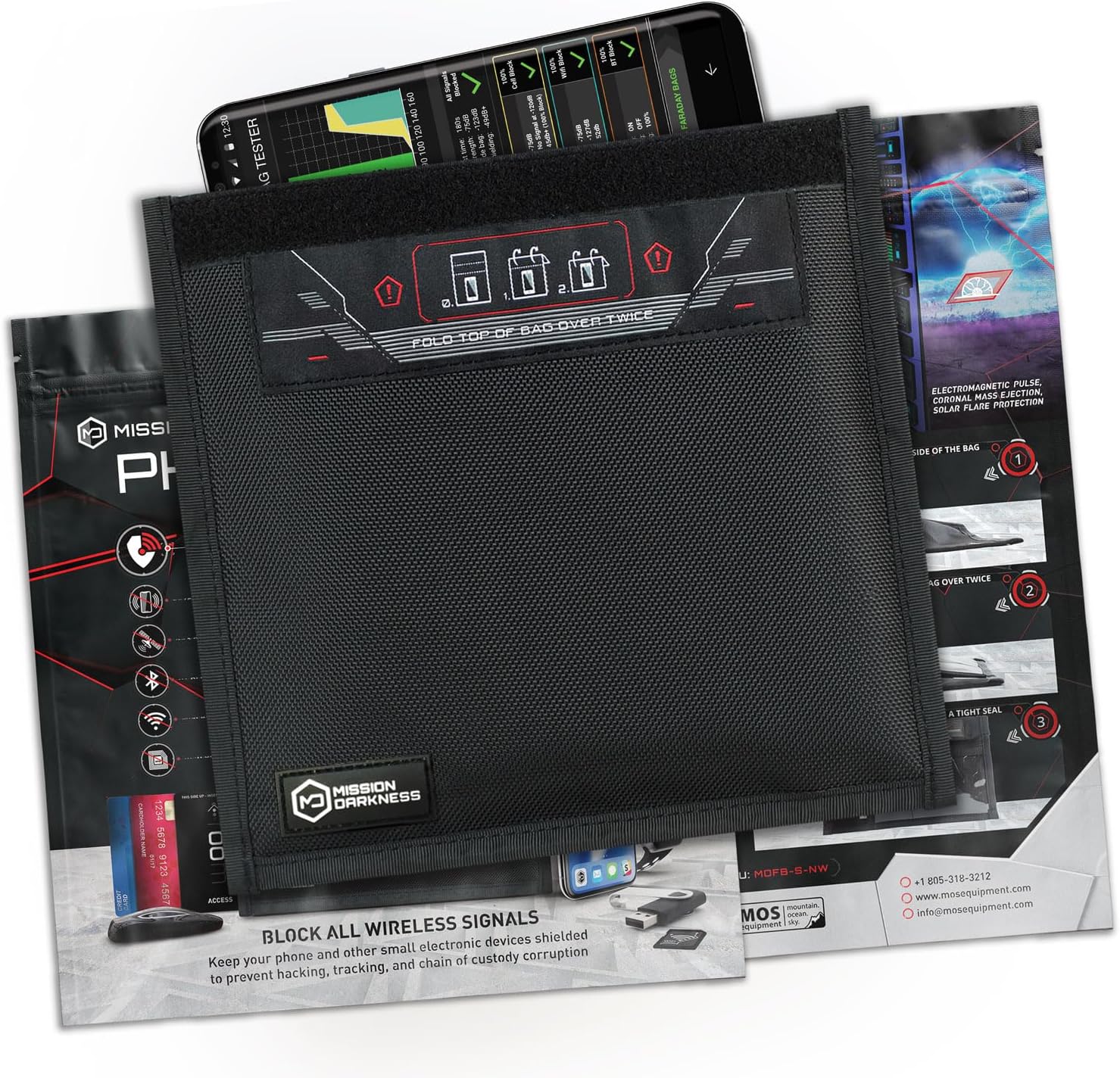
The Mission Darkness Non-Window Faraday Bag is a more traditional signal-blocking enclosure. Unlike a directional sleeve, it is designed to surround the phone with shielding material and prevent wireless communication when properly closed.
According to the Amazon listing, it is intended to block cellular networks, including 5G, as well as Wi-Fi, Bluetooth, GPS, RFID, and other radio signals. The seller describes shielding performance across a broad frequency range, but users should consult the latest technical documentation when a specific frequency or professional application matters.
The non-window construction removes the transparent viewing panel found on some Faraday bags. That may make the bag less convenient when checking the device screen, but it creates a simpler enclosed design for storage, privacy, travel, testing, or professional device handling.
Pros
- Designed to block multiple types of wireless communication.
- Suitable for complete disconnection and privacy-focused storage.
- More robust than a basic one-sided shielding sleeve.
Cons
- Bulkier than an ordinary phone pouch.
- Incoming calls, tracking, and wireless services stop while the phone is sealed.
My Honest Opinion
This Mission Darkness bag is the best choice for shoppers whose priority is full signal blocking rather than directional shielding. It is particularly appropriate for privacy, secure storage, travel, or temporary digital disconnection. For normal daily phone access, DefenderShield or RadiArmor will be more convenient.
Buyer’s Guide: 3 Key Factors to Consider
1. Choose Between Directional Shielding and Full Signal Blocking
The most important decision is whether you want the phone to remain connected.
Directional shielding pouches, such as DefenderShield, RadiArmor, and TOMUM, contain shielding material on one side. The shielded side is placed between the phone and the body while the other side allows communication with cellular towers and wireless networks.
Faraday bags, such as the two Mission Darkness products, are intended to enclose the entire phone. When properly sealed, they should stop incoming and outgoing wireless communication.
A directional pouch is more practical for everyday use. A Faraday bag is more appropriate for privacy, secure storage, travel, device testing, or intentional digital disconnection.
2. Check the Size, Closure, and Orientation
Compare the product’s internal measurements with the dimensions of your phone and its existing case. A sleeve that technically fits a bare phone may be too small for the same device inside a thick, rugged case.
For directional products, identify which side contains the shielding layer and keep that side facing your body. Using the sleeve in the opposite direction may defeat its intended purpose.
For a Faraday bag, inspect the closure system. Gaps, incomplete folds, worn shielding fabric, or an incorrectly secured flap can allow signals to pass through.
3. Look Beyond Percentage Claims
Statements such as “blocks 99%” are difficult to evaluate without supporting information. A useful laboratory report should identify:
- The frequency range that was tested.
- The test equipment and measurement standard.
- The distance between the source, product, and measuring device.
- The orientation and condition of the product.
- Whether the result applies to one shielded panel or the entire enclosure.
You can perform a basic functionality check on a full Faraday bag by sealing the phone inside and then calling it from another device. However, this test only indicates whether ordinary communication signals are getting through. It does not accurately measure directional RF attenuation or provide medical evidence.
Other Practical Ways to Reduce Cell Phone RF Exposure
Consumers do not necessarily need to purchase a special accessory to increase their distance from an operating phone. The FTC and FCC recommend practical measures that include:
- Using speakerphone when privacy allows.
- Using a wired earpiece or headset.
- Keeping the phone away from the body during calls.
- Sending messages instead of making long voice calls.
- Avoiding lengthy calls when the cellular signal is weak.
- Placing the phone on a desk or table rather than carrying it against the body.
Distance is particularly useful because radiofrequency exposure generally decreases as the phone moves farther away from the body.
Frequently Asked Questions
Do EMF phone pouches prevent health problems?
No manufacturer or retailer should guarantee that an EMF phone pouch prevents cancer, headaches, infertility, or any other medical condition. Current scientific evidence has not established that normal cell-phone radiofrequency exposure causes health problems. These products should be evaluated as shielding, carrying, signal-isolation, or privacy accessories—not as medical treatments.
What is the difference between an EMF sleeve and a Faraday bag?
An EMF sleeve usually shields one direction while allowing the phone to remain connected. A properly sealed Faraday bag surrounds the phone and is designed to block incoming and outgoing cellular, Wi-Fi, Bluetooth, GPS, and RFID communication.
Can I receive calls while my phone is inside an EMF pouch?
You can normally receive calls when using a one-sided directional pouch, although reception may vary. You should not receive calls when a phone is correctly sealed inside a functioning full Faraday bag.
Can partial shielding affect phone signal strength?
Yes. If a shield interferes with the phone’s connection, the device may increase its transmission power while attempting to maintain service. This is one reason to avoid poorly documented products and to use directional sleeves exactly as instructed.
How do I test a Faraday phone bag?
Place the phone inside, secure every part of the closure, and call the phone from another device. You can also check whether Bluetooth accessories disconnect and whether Wi-Fi or GPS services stop updating. Repeat the test several times and in different locations because signal strength can vary.
What is the best cell phone EMF protection product for daily use?
The DefenderShield EMF Radiation Blocker Phone Pouch is the most versatile daily-use option in this comparison because it combines directional shielding with a strap, storage pocket, and broad phone compatibility.
Which option is best for completely blocking phone signals?
The Mission Darkness Dry Shield is ideal when you need a weather-resistant enclosure, while the Mission Darkness Non-Window Faraday Bag is a strong option for traditional signal-blocking and privacy-focused storage.
Final Verdict
The best product depends on whether you want to stay connected or disconnect completely.
For everyday carrying, the DefenderShield EMF Radiation Blocker Phone Pouch is our best overall choice. It accommodates many phone sizes, includes a useful crossbody strap, and provides directional shielding without intentionally shutting down cellular service.
For a smaller and simpler sleeve, the RadiArmor EMF Blocking Cell Phone Sleeve offers a more compact design.
For complete wireless isolation, choose one of the Mission Darkness Faraday bags. The Dry Shield is better suited to outdoor or wet environments, while the Non-Window model is ideal for general privacy, secure device storage, and intentional disconnection.
Whichever product you choose, follow its instructions carefully, verify the phone’s fit, understand whether the design is directional or fully enclosed, and avoid relying on unsupported medical claims.
Check the DefenderShield EMF Phone Pouch on Amazon

Daniel Mitchell is a home appliances specialist with over a decade of hands-on experience testing, reviewing, and comparing everyday household products. He focuses on helping homeowners make smarter buying decisions through practical insights, real-world testing, and easy-to-understand advice. Daniel covers everything from kitchen appliances to smart home solutions, with a strong emphasis on performance, energy efficiency, and long-term reliability.